
What is miraaa?
MIRAAA Media Festival empowers artists from the South Texas-Mexico borderlands to explore non-traditional storytelling through collaboration and experimentation with the intention of illuminating under-represented border narratives. MIRAAA is organized and stewarded by artists and community organizers living and creating in the Rio Grande Valley, Laredo and Eagle Pass.
MIRAAA started in 2021 during the COVID-19 pandemic, as a way to bring artists of the Rio Grande Valley together through the commissioning of experimental video works and short films from the region. In 2024, MIRAAA expanded to include artists in Laredo, with the festival happening in Harlingen and Laredo.
2026 marks the third iteration of the festival, expanding further along the Texas/Mexico border to include the city of Eagle Pass. This year, the festival will take place over three consecutive weekends in August in McAllen (August 15), Eagle Pass (August 22) and Laredo (August 29).
Learn more at www.miraaamediafest.net
2026 MIRAAA Stewards: Josue Rawmirez, C. Díaz, Monica A. Sosa, Omar Casas, Laura D. Martinez, Lizett Montiel, Gabriela A. Treviño, Yocelyn Riojas, Norma Ortiz, Wendell Mendoza, Petra Sanchez, Alyssa Cigarroa & Nicolas Lewis.
MIRAAA Media Festival impulsa a artistas de la región fronteriza entre el sur de Texas y México a explorar formas de narración no tradicionales mediante la colaboración y la experimentación, con la intención de visibilizar historias y perspectivas de la frontera que han sido históricamente subrepresentadas. MIRAAA es organizado y coordinado por artistas y organizadores comunitarios que viven y crean en el Valle del Río Grande, Laredo y Eagle Pass.
MIRAAA comenzó en 2021, durante la pandemia de COVID-19, como una iniciativa para reunir a artistas del Valle del Río Grande mediante la creación de obras de video experimental y cortometrajes comisionados a artistas de la región. En 2024, MIRAAA se expandió para incluir a artistas de Laredo, con el festival realizándose en Harlingen y Laredo.
El 2026 marca la tercera edición del festival, que continúa expandiéndose a lo largo de la frontera entre Texas y México para incluir la ciudad de Eagle Pass. Este año, el festival se llevará a cabo durante tres fines de semana consecutivos en agosto: en McAllen (15 de agosto), Eagle Pass (22 de agosto) y Laredo (29 de agosto).
Conoce más en www.miraaamediafest.net
Curadores de MIRAAA 2026: Josue Rawmirez, C. Díaz, Monica A. Sosa, Omar Casas, Laura D. Martinez, Lizett Montiel, Gabriela A. Treviño, Yocelyn Riojas, Norma Ortiz, Wendell Mendoza, Petra Sanchez, Alyssa Cigarroa y Nicolas Lewis.
Core values
✰ MIRAAA Media Festival’s mission is to empower frontera artists to explore non-traditional storytelling and media through collaboration and experimentation with the intention of illuminating under-represented border narratives.
✰ MIRAAA Media Festival is committed to centering the work of BIPOC, LGBTQIA+, disabled, and other underrepresented individuals. We recognize the multitudes of intersections between these communities, and will continue to learn, listen and evolve our understanding of these experiences.
✰ MIRAAA Media Festival is feminist, queer, sex-positive, anti-capitalist and pro-collective liberation for oppressed communities across the globe.
✰ MIRAAA Media Festival does not tolerate or support individuals who perpetuate harm (physically, emotionally) through anti-immigrant, racist, sexist, homophobic, transphobic, ageist, and/or ableist comments, actions and/or artistic representations.
✰ MIRAAA Media Festival believes in restorative justice and harm reduction, and our commitment to this practice is a commitment to the betterment of our community.
✰ MIRAAA Media Festival reserves the decision to ban, remove, or block individuals who cause psychological, physical, emotional or mental harm at the festival, both physically and virtually.
BORDER
ARTS
2026 manifesto
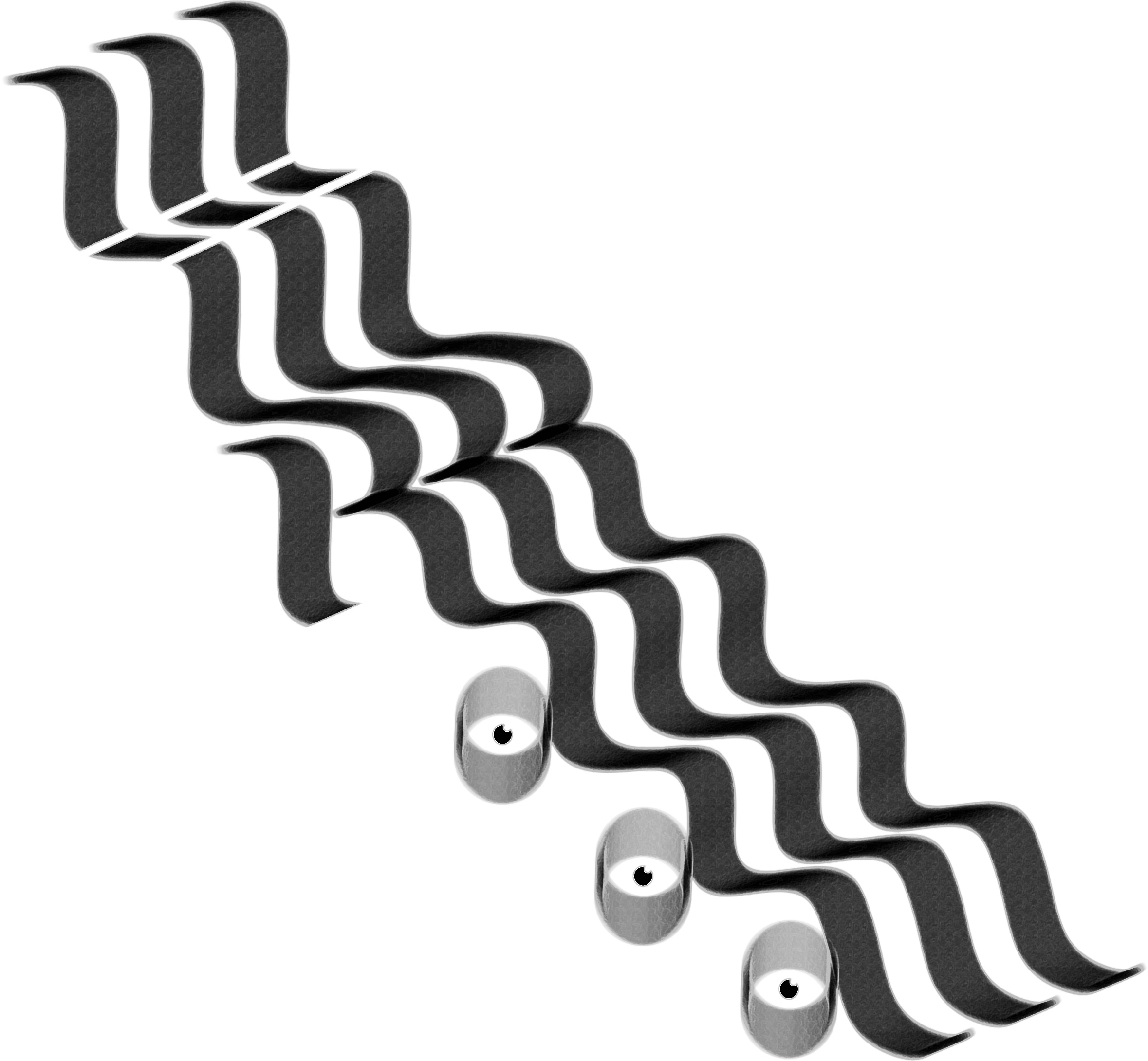
Like cinema itself, a river is composed of light and sound waves. It moves rhythmically in cycles of drought and flood, in changing shorelines. It has the ability to transform what it touches.
The river – our river – has always been here. Long before borders, before walls, before the narratives that have been concocted and imposed on it.
For those who live alongside the Río Grande / Río Bravo, the river is more than a geographical boundary. It is a shifting ecosystem that sustains life across the region. It is a living presence – a witness, a relative, a force that carries memory through the land along its currents. Its waters hold histories of movement, migration, resistance, and everyday life.
As this year’s festival expands across the Rio Grande Valley, Laredo, and Eagle Pass, we look to the river as a shared link to our communities. Rather than approaching the river only as a political boundary, we invite artists to explore it as a space of reflection, abstraction, and imagination.
The works presented in this edition approach the river as a living archive – a place where images, histories, and futures continue to flow.
With this in mind, we invite filmmakers and artists from the RGV, Laredo, Eagle Pass and neighboring Mexican cities to submit their work to the festival.
Como el cine en sí mismo, un río está compuesto de luz y ondas de sonido. Se mueve de manera rítmica en temporadas de sequía e inundaciones, en orillas que varían. Tiene la habilidad de transformar lo que toca.
El río (nuestro río) siempre ha estado aquí. Mucho antes que las fronteras, antes de los muros, antes de las narrativas que se han inventado y sido impuestas en él.
Para quienes viven junto al Río Bravo / Río Grande, este es más que un límite geográfico. Es un ecosistema cambiante que sostiene vida tras la región. Es una presencia viviente; un testigo, un familiar, una fuerza que carga la memoria atravesando la tierra a lo largo de sus corrientes. Sus aguas sostienen historias de movimiento, migración, resistencia y de la vida cotidiana.
Como este año el festival se expande desde el Valle del Río Grande, Laredo y Eagle Pass, reconocemos al río como un vínculo compartido en nuestras comunidades. En vez de acercarnos al río como meramente una frontera política, invitamos a artistas a explorarlo como un espacio de reflexión, abstracción e imaginación.
Las obras presentadas en esta edición se enfocan en el río como archivo viviente: un lugar donde fluyen continuamente sus imágenes, historias, y futuros.